Your Gut's First Responders: How Disrupting Intestinal Bacteria Leaves the Door Open for Dangerous Pathogens
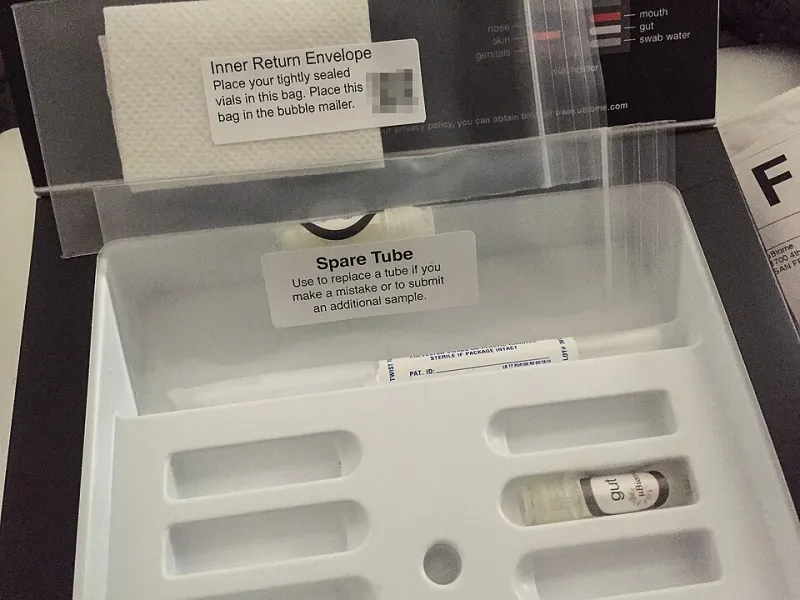
Photo: Tony Webster from San Francisco, California, CC BY 2.0, via Wikimedia Commons
For decades, American public health messaging has operated on a relatively straightforward premise: fewer germs mean better health. Hand sanitizers, antibacterial soaps, and broad-spectrum antibiotics became household staples, each marketed as a tool of protection. What that narrative consistently omitted, however, was the existence of a vast internal microbial community whose survival depends, in part, on not being relentlessly purged.
The human gastrointestinal tract contains somewhere between 10 trillion and 100 trillion microorganisms — bacteria, fungi, archaea, and viruses — collectively referred to as the gut microbiome. This community is not incidental to human health. It is, increasingly, understood to be central to it. And mounting clinical evidence suggests that when this ecosystem is destabilized, the consequences extend well beyond digestion.
Colonization Resistance: The Microbiome as a Living Shield
One of the most consequential functions of a healthy gut microbiome is a phenomenon researchers call colonization resistance. In practical terms, this means that a dense, diverse community of commensal bacteria physically and chemically prevents dangerous pathogens from establishing a foothold in the intestinal environment.
Commensal organisms compete with pathogens for binding sites on intestinal walls, consume the nutrients that harmful bacteria require to proliferate, and produce antimicrobial compounds — including short-chain fatty acids and bacteriocins — that suppress invasive species. Studies examining Clostridioides difficile infection, one of the most dangerous hospital-acquired illnesses in the United States, have illustrated this dynamic with particular clarity. Patients who develop C. difficile colitis almost universally do so following antibiotic exposure that has depleted their resident bacterial populations, leaving the gut environment open to opportunistic colonization.
The implication is significant: a diverse, intact microbiome does not merely coexist with immune function — it actively participates in it.
Antibiotics and the Collateral Damage Problem
No single factor has been more thoroughly studied in relation to microbiome disruption than antibiotic use. While antibiotics remain indispensable for treating serious bacterial infections, their effects are rarely confined to the target pathogen. Broad-spectrum agents, in particular, can reduce microbial diversity by orders of magnitude within days of administration, and full restoration of the pre-treatment microbiome may take months — or, in some cases, may never fully occur.
The United States has historically maintained one of the highest rates of outpatient antibiotic prescribing in the developed world, though improvements have been documented over the past decade. Still, the Centers for Disease Control and Prevention estimates that roughly 28 percent of outpatient antibiotic prescriptions in the U.S. remain unnecessary — written for viral infections against which antibiotics have no efficacy whatsoever.
Each of those prescriptions carries a cost that rarely appears on the label: a measurable reduction in the microbial diversity that constitutes one of the body's primary infectious disease defenses. The downstream effects include increased susceptibility not only to C. difficile, but to a range of gastrointestinal pathogens, including drug-resistant Salmonella and Enterococcus species.
The Antibacterial Consumer Product Question
The relationship between over-the-counter antibacterial products and microbiome health is more contested, but it is not without evidentiary basis. Triclosan, a synthetic antimicrobial compound that was once ubiquitous in American soaps, toothpastes, and household cleaners, was banned from rinse-off consumer products by the FDA in 2016 following concerns about its endocrine-disrupting properties and its potential contribution to antimicrobial resistance.
Research into triclosan's specific effects on the gut microbiome remains ongoing, but animal studies have documented measurable shifts in microbial community composition following exposure. Whether topical antibacterial products meaningfully alter gut flora in humans through systemic absorption or behavioral feedback loops — such as reduced incidental environmental microbial exposure — is a question researchers continue to investigate.
What the existing literature does support is a more general principle: environments that are aggressively decontaminated of all microbial life do not produce healthier humans. They may, in fact, produce humans with less-practiced immune systems and less-populated gut ecosystems. This does not mean that hand hygiene is harmful — it is not, and the evidence supporting handwashing as a transmission-reduction tool remains robust. The distinction lies between targeted, evidence-based hygiene and indiscriminate antimicrobial exposure applied to contexts where it offers no meaningful benefit.
Diversity as a Diagnostic Metric
Clinical researchers have increasingly begun treating microbiome diversity as a measurable indicator of immune resilience. Studies comparing the gut microbiomes of individuals in rural agricultural communities with those in urban American settings have consistently found lower diversity among the latter group — a finding correlated with higher rates of inflammatory and autoimmune conditions, though causality remains a subject of ongoing investigation.
Fecal microbiota transplantation (FMT), a procedure in which stool from a healthy donor is introduced into a patient's gastrointestinal tract, has emerged as one of the most compelling demonstrations of the microbiome's protective role. The FDA approved the first FMT-derived therapy for recurrent C. difficile infection in 2022, and clinical trials exploring FMT applications for a broader range of conditions are currently underway. The underlying logic is straightforward: restore the ecosystem, and the defensive function tends to follow.
What Patients and Clinicians Can Actually Do
The practical guidance emerging from this body of research is more nuanced than either hygiene maximalism or its opposite would suggest. Several evidence-supported strategies are worth considering.
First, antibiotic stewardship at the individual level matters. Patients who request antibiotics for viral illnesses — colds, flu, most sore throats — are not protecting themselves; they are incurring microbial collateral damage without therapeutic benefit. Clinicians who prescribe in response to patient pressure, rather than clinical indication, are contributing to a public health problem that extends beyond resistance into immune ecology.
Second, dietary patterns that support microbial diversity have a reasonable evidence base. Fiber-rich diets, fermented foods such as yogurt, kefir, and kimchi, and reduced consumption of ultra-processed foods have all been associated with more diverse gut microbiomes in observational research. These are not fringe recommendations — they align with existing dietary guidance from major health organizations.
Third, the reflexive application of antibacterial products to every surface and every interaction deserves scrutiny. Alcohol-based hand sanitizers used before meals or after contact with potentially contaminated surfaces represent rational, evidence-based hygiene. Antibacterial sprays applied to kitchen counters between every use, or the selection of antibacterial versions of products that have no clinical reason to be antibacterial, represent hygiene theater rather than infection control.
A Recalibrated Understanding of Protection
The emerging science of the gut microbiome does not ask Americans to become less cautious about infectious disease — it asks them to be cautious about the right things. The pathogens that cause genuine harm are real, well-documented, and worth defending against. The defenses the body has developed over millennia of coevolution with microbial life are equally real, and equally worth preserving.
Killing germs indiscriminately has never been a coherent public health strategy. What the evidence increasingly suggests is that it may, in specific and measurable ways, be a counterproductive one.