Declared Defeated, Yet Returning: The Infectious Diseases Reclaiming Ground in Modern America
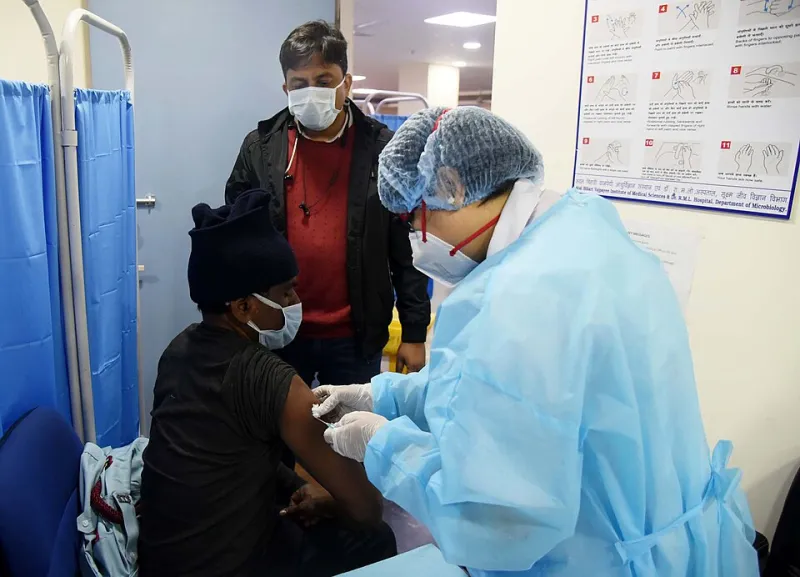
Photo: Ministry of Health and Family Welfare, GODL-India, via Wikimedia Commons
In 2000, the Centers for Disease Control and Prevention announced that measles had been eliminated from the United States—a milestone that represented decades of coordinated vaccination effort, public health infrastructure, and community-level trust in preventive medicine. Less than a decade later, outbreaks began reappearing in states where elimination had seemed permanent. In 2019, the United States recorded more than 1,200 measles cases, the highest annual count since 1992. The declaration of elimination had not been wrong. Something else had changed.
The story of measles is not unique. Pertussis, commonly known as whooping cough, never fully disappeared but has surged in cyclical waves, with tens of thousands of cases reported in recent peak years. And in 2022, poliovirus—a pathogen many American physicians had never expected to encounter in clinical practice—was detected in wastewater samples from multiple counties in New York, followed by a confirmed paralytic case, the first domestically acquired polio diagnosis in the country in nearly a decade. These are not isolated anomalies. They are signals from a public health system under pressure.
What "Eliminated" Actually Means—and What It Does Not
A critical starting point is understanding the precise language epidemiologists use when describing disease control. Elimination refers to the absence of endemic transmission within a defined geographic region. It does not mean eradication, which implies the global extinction of a pathogen. Measles, polio, and pertussis remain active in other parts of the world, and as long as international travel continues, the opportunity for importation persists.
This distinction matters enormously for policy. A country that achieves elimination must sustain the conditions that made elimination possible—primarily, high and geographically uniform vaccination coverage. When those conditions erode, even partially, eliminated diseases can re-establish transmission chains. The margin between elimination and resurgence is not as wide as public perception often assumes.
The Vaccination Coverage Problem Is More Granular Than It Appears
National vaccination statistics can be misleading. The United States maintains relatively high overall coverage for many childhood vaccines, but aggregate figures obscure significant variation at the county, school district, and community level. Epidemiologists refer to these as "pockets of susceptibility"—geographically clustered populations where vaccination rates fall below the threshold needed to sustain herd immunity.
For measles, that threshold is approximately 95 percent, reflecting the virus's extraordinarily high transmissibility. In communities where coverage drops to 85 or even 90 percent, enough unvaccinated individuals may be concentrated in close contact—through schools, religious institutions, or tight-knit social networks—to allow a single imported case to ignite a local outbreak.
These pockets exist across the political and demographic spectrum. Some are found in communities with philosophical or religious objections to vaccination. Others exist in low-income urban neighborhoods where healthcare access is inconsistent and routine childhood immunization is frequently delayed or missed. Both represent failures of the public health system, though the nature of those failures differs considerably.
Hesitancy, Access, and the Limits of a Single Explanation
Public discourse around vaccine-preventable disease resurgence often defaults to a single explanatory framework: vaccine hesitancy driven by misinformation. While hesitancy is a genuine and documented phenomenon with measurable effects on coverage rates, treating it as the sole driver misrepresents the epidemiological picture and, more practically, limits the range of policy responses considered.
In many underserved communities, the barriers to vaccination are logistical rather than ideological. Families without reliable transportation, those working multiple jobs without paid leave, or those navigating a fragmented healthcare system that lacks a consistent primary care relationship may simply never receive the recommended immunizations on schedule. Children in these circumstances are not the product of parental refusal—they are the product of structural neglect.
At the same time, organized vaccine hesitancy movements have demonstrably contributed to outbreaks. The 2019 measles surge was concentrated in Orthodox Jewish communities in New York, where targeted misinformation campaigns had successfully reduced vaccination rates over several years. Understanding both dynamics simultaneously—systemic access failure and active hesitancy—is necessary for any honest accounting of why these diseases are returning.
Global Travel as an Amplifier of Domestic Vulnerability
The United States does not exist in epidemiological isolation. Measles importations frequently originate from regions where the disease remains endemic, including parts of Europe, Asia, and Africa. As international travel volumes have returned to pre-pandemic levels, the frequency of importation events has increased accordingly.
Importation itself is not inherently dangerous to a well-immunized population. A traveler returning with measles to a community with 97 percent vaccination coverage is unlikely to trigger sustained transmission. The same traveler arriving in a community with a vaccination pocket at 80 percent coverage may initiate an outbreak that spreads for weeks before containment is achieved.
This interaction between global mobility and domestic vulnerability is one of the more underappreciated dynamics in contemporary infectious disease epidemiology. Surveillance systems designed to detect importation events exist, but their effectiveness depends on timely reporting, clinical recognition of diseases that many younger healthcare providers have never seen in practice, and rapid public health response capacity—resources that have been strained by years of underfunding at the state and local level.
The Infrastructure Behind the Immunization Schedule
Vaccines do not administer themselves. The immunization schedule recommended by the Advisory Committee on Immunization Practices represents an extraordinary scientific achievement, but it functions only when a functional delivery infrastructure exists to implement it. That infrastructure includes pediatricians and family physicians, community health centers, school-based vaccination programs, public health departments with adequate staffing, and outreach capacity to identify and engage under-vaccinated populations.
Decades of underfunding at the public health infrastructure level—a pattern that predates and extends well beyond the COVID-19 pandemic—have weakened the connective tissue of that system. Local health departments in many states operate with fewer staff than they employed twenty years ago, despite serving larger and more complex populations. When an outbreak occurs, the response capacity that should be immediately available is frequently assembled under crisis conditions rather than maintained in readiness.
Recognizing Diseases That Training Has Not Prepared Clinicians to See
There is a clinical dimension to this problem that receives insufficient attention. A generation of American physicians completed their training without encountering measles, pertussis in its severe form, or polio in a patient. Diseases that were theoretical in medical school can be diagnostically unfamiliar in the examination room.
Delayed recognition of measles or pertussis extends the window during which an infected individual remains in circulation, potentially exposing others. Early identification and isolation are among the most effective tools for limiting outbreak size, and those tools depend on clinicians who recognize what they are looking at. Reinvesting in infectious disease education—including the clinical presentation of diseases considered historically obsolete—is a practical response to a practical problem.
A Reckoning With What Eradication Requires
The resurgence of diseases that were once declared eliminated is not a story of inevitable failure. It is a story of what happens when the sustained effort required to maintain elimination is treated as complete rather than ongoing. Vaccination campaigns, public health infrastructure, access equity, clinical education, and global surveillance all require continuous investment. When any of these elements weakens, pathogens that have not disappeared from the world find the openings they need.
The science of prevention has not failed. The commitment to deploying that science—equitably, consistently, and with adequate resources—has been uneven. That is a policy problem as much as it is a medical one, and it will require policy-level responses to address.