Left Behind by the Numbers: The Americans Suffering From Infections Too Rare to Fund, Too Obscure to Treat
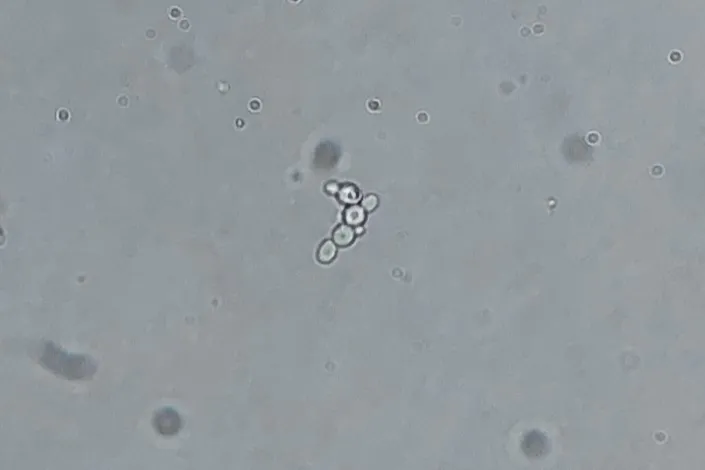
Photo: Mediocreclementine, CC0, via Wikimedia Commons
Medical research in the United States operates, to a significant degree, on the logic of scale. The diseases that kill or disable the most people attract the most funding, the most pharmaceutical interest, and the most clinical expertise. This is not entirely irrational—resource allocation in any system requires prioritization. But the logic has a shadow side that rarely surfaces in policy discussions: the patients it leaves behind.
For individuals diagnosed with low-prevalence infectious diseases—conditions affecting anywhere from a few hundred to a few tens of thousands of Americans—the healthcare system can feel less like a safety net and more like an obstacle course. Their infections are real. Their suffering is documented. But the research infrastructure required to understand, diagnose, and treat them has often never been built.
The Economics of Neglect
The term "orphan disease" entered American medical and legal vocabulary with the Orphan Drug Act of 1983, which created financial incentives for pharmaceutical companies to develop treatments for conditions affecting fewer than 200,000 people in the United States. The legislation was a genuine achievement, spurring development of hundreds of treatments that would otherwise have been commercially unviable.
But the Orphan Drug Act's reach has limits, and within the domain of infectious disease, those limits are particularly consequential. Unlike rare genetic disorders—which may affect small populations but often have well-characterized molecular mechanisms—rare infectious diseases can be complicated by diagnostic ambiguity, regional clustering, and the challenge of identifying patient populations in the first place. A pathogen that circulates in a specific geographic area, or that disproportionately affects communities with limited healthcare access, may never generate the case counts needed to attract sustained research attention.
The result is what some researchers have begun calling a "two-tiered" infectious disease landscape: a well-resourced tier of common infections with established treatment protocols, and a second tier of neglected pathogens where clinicians improvise, patients wait, and the scientific literature offers little guidance.
Profiles in Neglect
The infections occupying this second tier are varied in their biology but consistent in their experience for patients.
Bartonellosis—infection with bacteria of the genus Bartonella—offers one illustration. While cat scratch disease, the most common Bartonella infection in the U.S., is generally self-limiting and well-recognized, other manifestations of Bartonella infection can be chronic, systemic, and profoundly disabling. Patients with neurological or cardiovascular Bartonella presentations frequently report years of misdiagnosis, partly because testing is inconsistent and partly because the clinical community has limited familiarity with atypical presentations. Treatment guidelines remain contested, and the evidence base for long-term management is thin.
Baylisascaris procyonis—a roundworm carried by raccoons that is present across much of the continental United States—causes a rare but devastating neurological disease when humans inadvertently ingest its eggs. Cases are scattered, often affecting young children, and the condition carries high mortality and morbidity. There is no FDA-approved treatment. Physicians managing these cases rely on antiparasitic drugs used off-label, guided by a handful of case reports rather than clinical trial data.
Acanthamoeba keratitis, a parasitic eye infection most commonly associated with contact lens use, affects an estimated 85 people per million contact lens wearers annually in the U.S.—rare enough to fall outside mainstream ophthalmological training, yet common enough to devastate the patients who develop it. Treatment is prolonged, painful, and inconsistently effective. Many patients experience permanent vision loss not because the infection is inherently untreatable, but because diagnosis is frequently delayed by practitioners who have never encountered the condition before.
The Diagnostic Void
Across these conditions, a common theme emerges: the absence of reliable diagnostic infrastructure. Rare infections are frequently misdiagnosed as more common conditions, and the delay between symptom onset and correct diagnosis can span years. During that interval, patients may undergo unnecessary treatments, accumulate significant medical costs, and experience disease progression that might have been arrested with earlier intervention.
This diagnostic void is partly a function of clinician training. Medical education in the United States, like research funding, allocates attention in proportion to disease prevalence. A physician completing a residency in internal medicine will develop substantial fluency in managing influenza, urinary tract infections, and community-acquired pneumonia. They are far less likely to have encountered—let alone studied in depth—the presentations of rare parasitic infections or emerging regional pathogens.
Laboratory capacity compounds the problem. Specialized testing for low-prevalence pathogens is often available only at a small number of academic medical centers or reference laboratories, creating geographic disparities in diagnostic access. Patients in rural areas, or those without the resources to seek out specialized care, may never receive a definitive diagnosis at all.
Funding Structures and Their Blind Spots
The National Institutes of Health distributes research funding through a process that, while scientifically rigorous, inherently favors areas with established research communities and publication records. Rare infectious diseases, by definition, have smaller investigator communities, fewer preliminary studies, and less competitive grant applications—not because the science is less important, but because the infrastructure to support it has never been built.
The Centers for Disease Control and Prevention maintains surveillance programs for a range of neglected tropical diseases and rare infections, but surveillance is not the same as research. Knowing that a disease exists and tracking its occurrence does not generate the clinical trial data needed to establish treatment protocols, develop diagnostics, or train clinicians.
Advocacy organizations for rare infectious diseases exist but operate with resources that are a fraction of those available to better-known conditions. Patient communities are small, geographically dispersed, and often too ill to mount sustained advocacy campaigns. The structural disadvantage compounds itself.
Toward a More Equitable Infectious Disease Framework
Addressing the neglect of rare infectious diseases does not require abandoning the prioritization frameworks that make large-scale public health possible. It requires recognizing that those frameworks have blind spots—and that the patients in those blind spots deserve a more deliberate policy response.
Several proposals have circulated in academic and policy circles. Expanded NIH funding mechanisms specifically targeting low-prevalence infectious diseases, modeled on the rare disease provisions of the Orphan Drug Act, could help build the research infrastructure that currently does not exist. Integration of rare infection case studies into medical education curricula could reduce diagnostic delays. Regional centers of excellence—analogous to the network model used for other rare conditions—could concentrate diagnostic and clinical expertise in ways that are accessible to referring physicians nationwide.
For the Americans currently navigating these conditions, policy reform is a distant abstraction. Their immediate reality is a medical system that acknowledges their suffering without yet having the tools to address it. Closing that gap is not merely a matter of scientific interest. It is a matter of basic equity in how American medicine decides whose diseases are worth understanding.