After the Infection Clears: The Science of Post-Viral Illness and Its Long Shadow on Immune Health
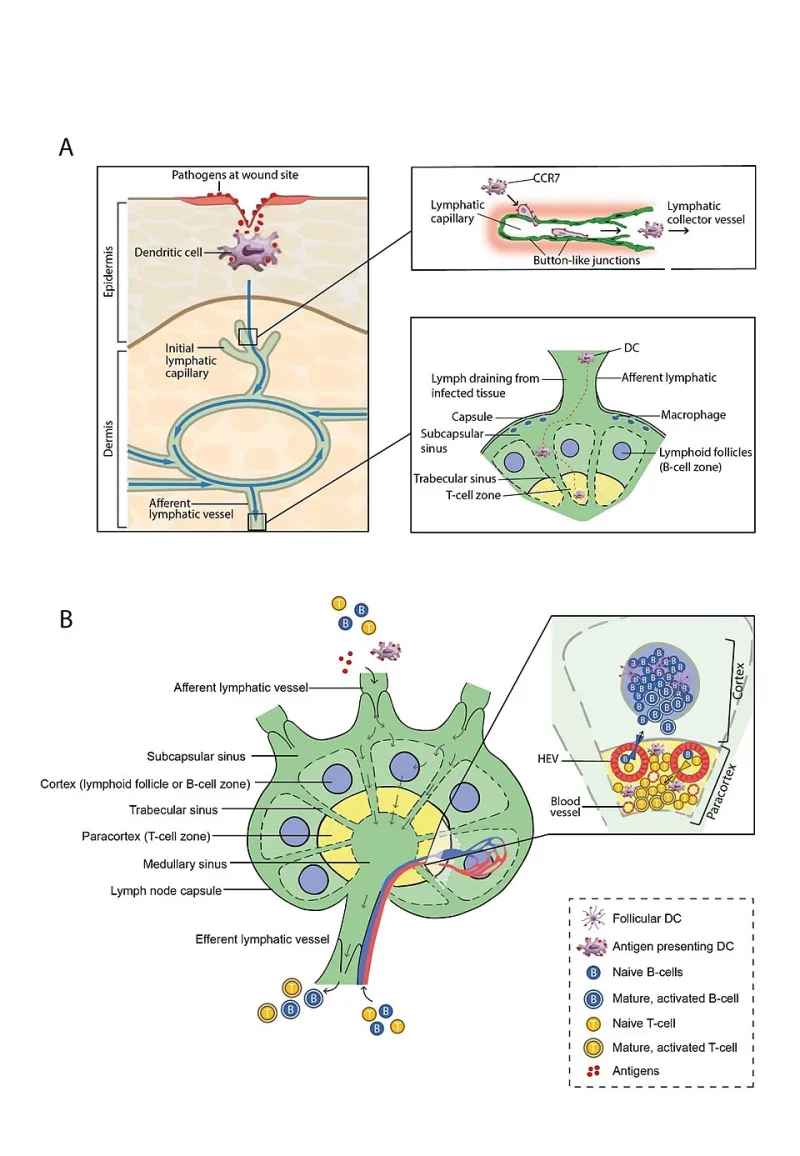
Photo: SGUL lymres, CC BY-SA 4.0, via Wikimedia Commons
The Infection That Doesn't Fully End
Most Americans understand illness through a reassuringly linear framework: exposure, symptoms, recovery, return to normal. For an expanding cohort of patients, that arc has proven incomplete. Weeks or months after an acute infection resolves—by conventional measures, at least—they remain unwell. Fatigue that sleep does not relieve. Cognitive difficulties that colleagues and family find hard to see but that patients experience as debilitating. Heart rate fluctuations triggered by simply standing up. Metabolic irregularities that appear on no standard panel.
Long COVID gave this phenomenon a name and a platform, drawing unprecedented research attention to what virologists and post-infectious disease specialists had observed for decades in smaller patient populations. What is now becoming clear is that SARS-CoV-2 did not invent post-viral illness—it illuminated it. And the implications of that illumination extend well beyond COVID-19 itself.
What the Immune System Looks Like After Prolonged Viral Exposure
To understand post-viral syndromes, it is necessary to examine what persistent viral activity does to immune architecture. In a standard acute infection, the immune response follows a predictable sequence: innate defenses activate rapidly, adaptive immunity develops over days to weeks, and once the pathogen is cleared, regulatory mechanisms dampen the inflammatory response. The system returns, more or less, to baseline.
In patients who develop long-term complications, that dampening phase appears disrupted. Research published in peer-reviewed journals including Nature and Cell has documented several immunological abnormalities in Long COVID patients that persist months after acute illness. These include elevated levels of inflammatory cytokines—signaling proteins that ordinarily subside after infection. Reactivation of latent herpesviruses, particularly Epstein-Barr virus, has been documented in a subset of Long COVID patients, suggesting that SARS-CoV-2 may destabilize the immune equilibrium that normally holds these dormant pathogens in check.
Autoantibodies—immune proteins that mistakenly target the body's own tissues—have also been detected at higher rates in Long COVID patients than in recovered controls. Some of these autoantibodies target G-protein coupled receptors involved in autonomic nervous system regulation, which may help explain the dysautonomia—disordered autonomic function—that many patients describe.
Dysautonomia, Metabolic Dysfunction, and the Breadth of Long-Term Effects
Postural orthostatic tachycardia syndrome, or POTS, has emerged as one of the more consistently documented post-COVID conditions in US clinical settings. Characterized by an excessive increase in heart rate upon standing, POTS reflects dysfunction in the autonomic nervous system's ability to regulate cardiovascular responses to positional changes. Prior to the pandemic, POTS was considered a relatively rare condition, predominantly affecting young women. Post-COVID clinics across the country are now seeing it in patients with no prior cardiac history, including men and older adults.
Metabolic disruption represents another dimension of post-viral illness that researchers are only beginning to characterize. Studies have identified mitochondrial dysfunction in Long COVID patients—impairment in the cellular machinery responsible for energy production—which may underlie the profound fatigue that resists conventional explanation. Insulin resistance and dysregulated glucose metabolism have also been observed at elevated rates in individuals who had COVID-19, even among those with mild acute illness.
Cognitive symptoms, colloquially termed "brain fog," appear to involve neuroinflammation and possibly microglial activation—the brain's resident immune cells shifting into a sustained inflammatory state. Neuroimaging studies have documented structural and metabolic changes in the brains of some Long COVID patients, lending biological credibility to symptoms that were initially met with skepticism in clinical settings.
This Is Not Exclusively a COVID Story
The mechanisms described above did not originate with SARS-CoV-2. Post-viral syndromes following other pathogens have been documented for well over a century. Myalgic encephalomyelitis, also known as chronic fatigue syndrome or ME/CFS, has been linked to Epstein-Barr virus, enterovirus infections, and other pathogens. Post-Lyme disease syndrome, while distinct in etiology, shares clinical features with post-viral presentations. Post-acute sequelae have been documented following SARS-CoV-1, influenza, and West Nile virus.
What COVID-19 has provided is scale. With millions of Americans infected, researchers have been able to study post-viral phenomena in populations large enough to yield statistically meaningful data. The insights emerging from Long COVID research are already being applied retroactively to conditions that affected far smaller patient populations—populations that often spent years without credible diagnoses or treatment pathways.
For US clinicians, this historical context matters. Patients presenting with chronic fatigue, autonomic instability, and cognitive difficulties following any significant infection deserve systematic evaluation rather than dismissal. The tendency to attribute unexplained post-infectious symptoms to psychological causes has delayed appropriate care for generations of patients with ME/CFS. Long COVID, despite its challenges, has created an opportunity to correct that pattern.
The Diagnostic Gap and What It Costs Patients
One of the most significant barriers facing Americans with post-viral illness is diagnostic. Standard laboratory panels—complete blood counts, metabolic profiles, thyroid function tests—frequently return within normal ranges in these patients, even when subjective disability is severe. This creates a frustrating clinical paradox: patients who are genuinely ill and functionally impaired, with no abnormalities on conventional testing.
Specialized investigations—autonomic function testing, cytokine panels, detailed neuroimaging, viral reactivation markers—can reveal abnormalities, but access to these tools is unevenly distributed across the US healthcare landscape. Academic medical centers in major metropolitan areas have established dedicated post-COVID clinics with multidisciplinary expertise. Patients in rural areas or those without comprehensive insurance coverage face substantially higher barriers to this level of evaluation.
The economic costs are substantial. A 2023 analysis estimated that Long COVID alone accounts for hundreds of billions of dollars annually in lost wages and healthcare expenditure in the United States. This figure does not capture the costs associated with other post-viral conditions that remain underdiagnosed and underreported.
Navigating Treatment in Unmapped Territory
There is currently no FDA-approved treatment specifically for Long COVID or most other post-viral syndromes. Clinical management remains largely symptomatic and supportive. For dysautonomia, increased fluid and salt intake, compression garments, and in some cases low-dose beta-blockers or other medications used in POTS management have shown benefit. Pacing strategies—carefully managing physical and cognitive activity to avoid post-exertional malaise—are broadly recommended, though they require patient education and often occupational therapy support.
Clinical trials investigating potential interventions, including antivirals, immunomodulatory agents, and low-dose naltrexone, are ongoing. The National Institutes of Health's RECOVER initiative represents the most substantial federal investment in post-COVID research to date, though patient advocates have raised concerns about the pace of translating findings into clinical guidance.
For patients navigating this terrain now, finding clinicians who take post-viral illness seriously—and who are familiar with current evidence—remains a practical challenge. Professional organizations including the American Academy of Physical Medicine and Rehabilitation have published clinical guidance on post-COVID conditions, offering a starting framework for primary care providers who may encounter these patients without specialized training.
The larger lesson of Long COVID may be that infectious disease does not always end with the infection. Viral pathogens interact with human physiology in ways that can reshape immune function, neurological regulation, and metabolic processes long after the acute phase resolves. Acknowledging that reality—and building healthcare systems equipped to respond to it—is among the more consequential public health tasks of the current era.