Too Clean to Fight Back: How America's War on Germs May Be Weakening the Immune Systems It Means to Protect
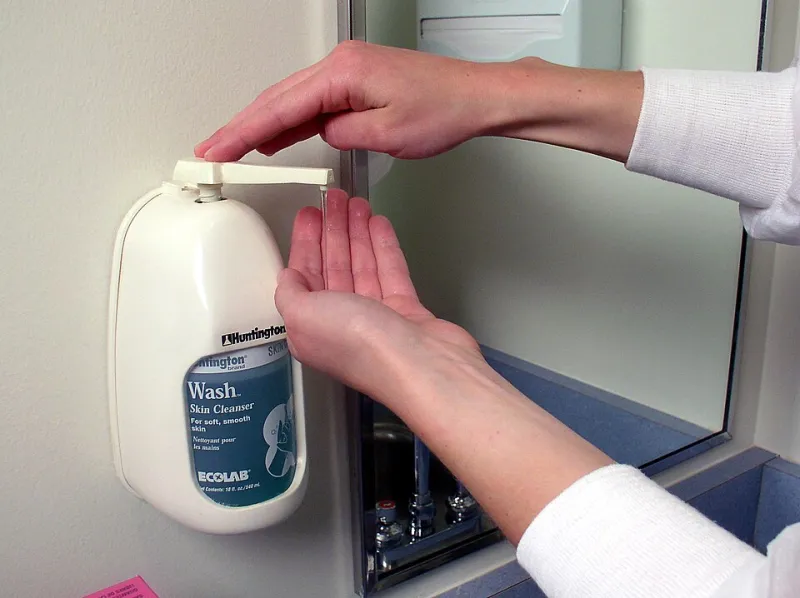
Photo: CDC, Kimberly Smith, Christine Ford, Public domain, via Wikimedia Commons
For most of the twentieth century, the story of American public health was a story of elimination. Eliminate the contaminated water. Eliminate the disease-carrying vectors. Eliminate the microbes on the countertop, the doorknob, the child's hand before dinner. That campaign, by nearly every measurable standard, saved lives on a massive scale. Cholera, typhoid, and dysentery—once fixtures of American mortality statistics—faded into near-irrelevance. The lesson seemed obvious: cleaner meant safer.
But immunologists have spent the last three decades quietly complicating that narrative. The same hygienic infrastructure that vanquished waterborne epidemics may, in its more extreme modern iterations, be producing a population whose immune systems have never learned to do their most fundamental job.
The Hypothesis That Became Hard to Ignore
In 1989, British epidemiologist David Strachan published a short but provocative paper in the British Medical Journal observing that children with more siblings—and presumably more exposure to infections—had lower rates of hay fever. He proposed that reduced microbial exposure in early childhood might be driving the rise in allergic disease. The idea became known as the hygiene hypothesis.
The framing has since been refined considerably. Immunologists now prefer terms like the "old friends" hypothesis, which more precisely describes the problem: the human immune system co-evolved over hundreds of thousands of years alongside a rich ecosystem of microorganisms—bacteria, helminths, environmental fungi, and commensal viruses. These weren't pathogens in the traditional sense. They were, in many respects, training partners.
"The immune system is not a static defense wall," explains one framework articulated repeatedly in the clinical literature. "It is a dynamic learning system that requires ongoing input to calibrate its responses correctly." Without that input, the system doesn't simply sit idle. It misfires.
What Happens When the Training Stops
The consequences of microbial deprivation are not limited to allergies and asthma, though the association there is well-documented. Research has increasingly linked reduced early-life microbial exposure to higher rates of autoimmune conditions, inflammatory bowel disease, and—crucially for infectious disease specialists—a diminished capacity to mount effective responses to novel pathogens.
This last point is where the hygiene hypothesis intersects most directly with infectious disease vulnerability. A well-trained immune system doesn't just recognize familiar threats; it has the regulatory architecture to respond proportionately and efficiently to unfamiliar ones. An under-stimulated immune system may lack that architecture entirely.
Studies examining populations with high antimicrobial product use have found disruptions in the gut microbiome—the vast community of microorganisms residing in the human digestive tract—that correlate with impaired immune signaling. The gut microbiome is now understood to be a critical site of immune education, particularly in early childhood. When its composition is repeatedly disrupted by antibacterial soaps, alcohol-based sanitizers, and antibiotic overuse, the downstream immunological effects can persist for years.
The Antimicrobial Product Boom
The American market for antimicrobial consumer products has expanded dramatically over the past two decades, accelerating sharply after the COVID-19 pandemic. Hand sanitizers, antibacterial dish soaps, disinfectant sprays, antimicrobial cutting boards, and even antimicrobial-treated clothing have become standard household items. In many American homes, the goal is not simply to reduce pathogen load—it is to eliminate microbial life as comprehensively as possible.
The U.S. Food and Drug Administration took steps in 2016 to ban certain antimicrobial ingredients—including triclosan and triclocarban—from consumer soaps after manufacturers failed to demonstrate that they were more effective than plain soap and water. The ruling acknowledged that these compounds posed potential health risks and offered no proven benefit. Yet the broader cultural impulse toward sterilization has remained largely unchanged.
Immunologists note a particular concern with the indiscriminate use of these products outside clinical or high-risk settings. In a hospital context, rigorous disinfection protocols save lives. In a suburban kitchen, they may be eliminating precisely the kind of low-level microbial diversity that keeps immune systems calibrated.
Finding the Threshold: Protective Hygiene vs. Immunological Deprivation
The challenge for clinicians and public health communicators is that the hygiene hypothesis does not argue against cleanliness. It argues against a particular kind of excess—one that has become culturally normalized in the United States in ways that are difficult to disentangle from legitimate infection control.
Washing hands before meals and after using the restroom remains among the most evidence-supported interventions in infectious disease prevention. Proper food handling, clean drinking water, and basic sanitation infrastructure are non-negotiable public health achievements. No immunologist is suggesting Americans return to nineteenth-century conditions in the name of immune training.
What researchers are suggesting is more nuanced: that outdoor exposure, contact with soil and animals, reduced reliance on antimicrobial products in low-risk domestic settings, and a more permissive attitude toward the ordinary microbial encounters of daily life may meaningfully support immune development—particularly in children, but with implications that carry into adult health as well.
Some clinicians have begun recommending what might be described as a "strategic dirtiness" framework—encouraging patients to garden without gloves, allow children to play in dirt, adopt pets, and avoid reflexive sanitizer use in non-clinical settings. The evidence base for these specific recommendations is still developing, but the underlying immunological rationale is increasingly difficult to dismiss.
A Population-Level Concern
From a public health perspective, the implications extend beyond individual immune profiles. A population whose immune systems have been systematically under-stimulated may be collectively more vulnerable to emerging pathogens—precisely the scenario that pandemic preparedness frameworks are designed to address.
The COVID-19 pandemic offered a partial, unintended test of one dimension of this concern. Extended periods of social distancing and mask use—necessary interventions at the time—also dramatically reduced exposure to common respiratory viruses. The subsequent seasons saw unusual surges in RSV, influenza, and other pathogens, particularly among children who had missed typical windows of exposure. While this reflected disrupted exposure rather than immunological deprivation in the strict hygiene hypothesis sense, it illustrated the principle vividly: immune systems need encounters to stay ready.
The sanitation-disease paradox is not an argument for abandoning the public health gains of the past century. It is a call to apply those gains with greater precision—to distinguish between the hygiene that protects and the sterility that isolates. In a country that has arguably overcorrected toward the latter, that distinction may be worth taking seriously.