Raw Chicken, Meet Kitchen Counter: The Hygiene Habits That Actually Cause Foodborne Illness
The Wrong Enemy
American hygiene culture has a targeting problem. We sanitize door handles, avoid hotel remotes, and wipe down grocery carts, all while performing — several times a week, in our own kitchens — the single behaviors most responsible for an estimated 48 million domestically acquired foodborne illnesses each year. The evidence from observational studies of home cooking is unambiguous: the kitchen, not the doorknob, is where the preventable contamination happens.
This is not an argument for laxity. It is an argument for precision — for spending limited attention on the risks that carry the epidemiological weight.
The Washing Ritual That Backfires
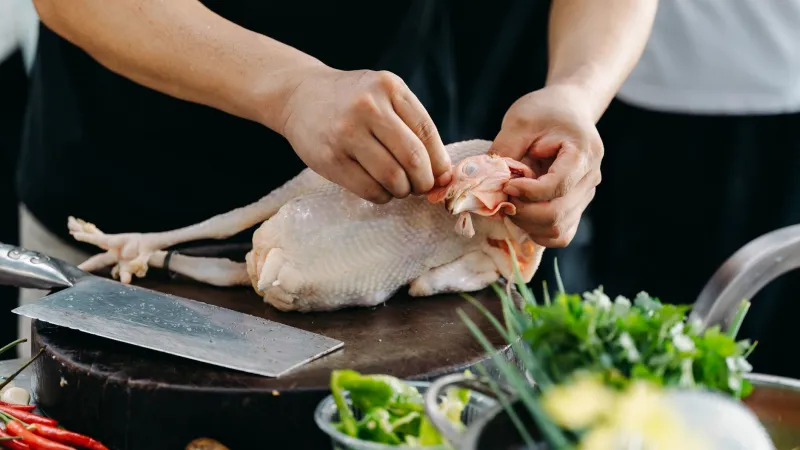
Start with the most widespread counterproductive habit: rinsing raw poultry under the tap. Surveys suggest a substantial share of American home cooks do it, many citing a belief that washing removes bacteria. In fact, it accomplishes the opposite. USDA-funded studies using cameras and dye demonstrated that chicken rinse water aerosolizes Salmonella and Campylobacter up to three feet in every direction, seeding nearby counters, utensils, and ready-to-eat foods. The contamination spreads silently, invisibly, and predictably.
Heat kills these pathogens reliably; water does not. The safest raw chicken is unwashed chicken, cooked to 165°F.
Cross-Contamination: The Dominant Failure Mode
The landmark research here comes from food safety laboratories that film home cooks preparing meals, then culture the surfaces afterward. The findings are consistent across studies. A majority of participants who handled raw poultry transferred detectable pathogens to spice containers, refrigerator handles, and sink fixtures. Cutting boards — particularly wooden and worn plastic ones — retained bacteria in knife grooves that survived casual rinsing.
The critical detail is sequence. Contamination of a raw protein is survivable if everything it touches is subsequently cooked. Contamination becomes illness when the same hands, board, or knife then contact a food eaten raw — the salad, the bun, the fruit. Outbreak investigations repeatedly trace illness to exactly this bridge: raw animal product on one side, ready-to-eat food on the other, and a shared surface in between.
Two habits break the bridge almost entirely: designating one cutting board for raw animal proteins, and washing hands with soap — not a rinse, not sanitizer — after every raw meat encounter. Alcohol-based sanitizer, worth noting, is unreliable against the non-enveloped viruses and bacterial spores common in foodborne illness.
The Thermometer Nobody Owns
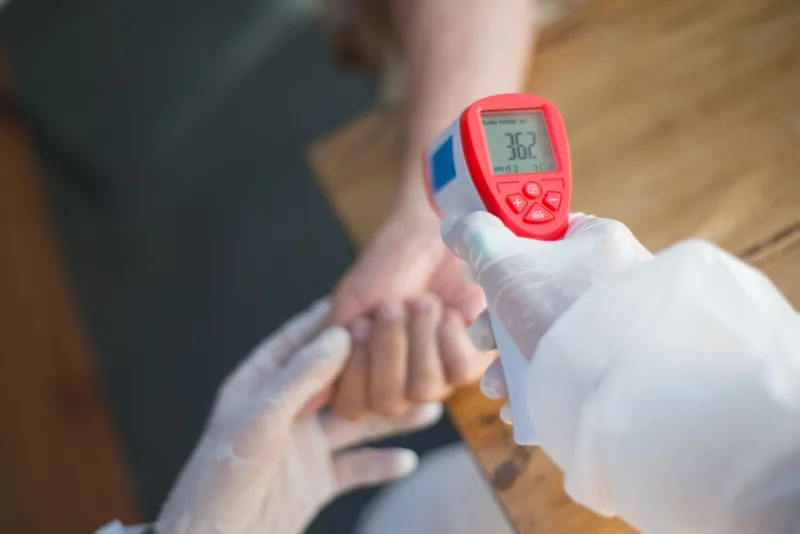
Visual doneness cues are folklore. Color, firmness, and juiciness correlate poorly with internal temperature, and studies of home cooks show most substantially undercook ground beef and poultry by sight alone. A five-dollar instant-read thermometer, used at the thickest point, eliminates guesswork for the price of a coffee. The CDC's guidance is specific: 165°F for poultry, 160°F for ground meats, 145°F with rest for whole cuts and fish.
Refrigeration deserves equal attention. Pathogens like Listeria monocytogenes — the organism behind deadly deli meat and soft cheese outbreaks — grow, slowly, even at proper refrigerator temperatures, but rapidly when leftovers linger at room temperature. The two-hour rule for perishables is not a suggestion; above 90°F ambient heat, it drops to one hour.
What Deserves Less Attention
Honest accounting requires naming the rituals that matter little. Disinfecting doorknobs, quarantining mail, and wiping down sealed grocery packaging have no meaningful foodborne illness burden attached to them. Five-second rules, in either direction, are fiction — transfer of bacteria to dropped food occurs essentially instantly for moist foods. And antibacterial soaps offer no demonstrated advantage over plain soap for household use, a conclusion the FDA itself reached when it removed certain ingredients from the market.
A Better Contract With the Kitchen
The kitchen microbiology literature points toward a short, evidence-backed protocol: don't wash raw poultry; use soap and water on hands after raw meat; separate boards for raw proteins and produce; verify doneness with a thermometer; refrigerate promptly. Five behaviors, each taking seconds, collectively addressing the dominant pathways of domestic foodborne disease.
Hygiene anxiety aimed at doorknobs is comforting because it demands nothing of our cooking routines. The uncomfortable truth is that preventing foodborne illness starts at the cutting board — and the tools to do it cost less than a takeout order.